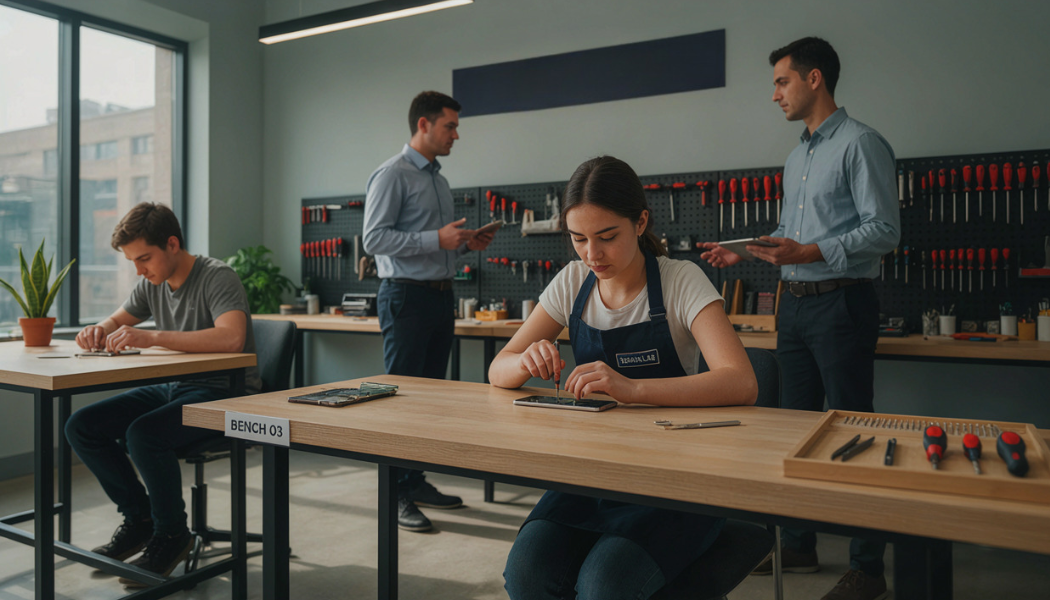
Completing Plus Two is an important milestone for students planning their future careers. While many students choose traditional degree programmes, others look for practical, skill-based courses that can help them enter a technical profession. One option worth exploring is mobile phone repair training.
With smartphones playing an essential role in communication, education, business, and entertainment, the need for skilled technicians who can diagnose and repair mobile devices continues to create opportunities in the electronics service industry. For students in Manjeri, mobile repair training can be a practical way to develop technical knowledge and explore different career paths after Plus Two.
Students do not always need to follow a conventional academic route to build a career. Skill-based training allows them to learn practical techniques and gain knowledge related to a specific industry.
Mobile repair training introduces students to smartphone hardware, electronic components, troubleshooting methods, and repair procedures. It can be particularly suitable for students who enjoy working with technology and solving technical problems.
Some important reasons to consider this field include:
Mobile repair training can help students build a foundation for several technical career paths. The opportunities available will depend on their practical ability, training quality, experience, and local employment demand.
A mobile phone repair technician identifies and resolves common smartphone issues. These may include charging problems, damaged displays, battery issues, speaker faults, and certain hardware malfunctions.
Students who develop strong troubleshooting skills and gain practical experience may pursue technician roles in mobile service centres and independent repair shops.
Smartphone hardware repair involves understanding the internal components of a device and identifying faults that affect its operation. Training may introduce learners to circuit boards, connectors, electronic components, and diagnostic tools.
With additional practice and specialised training, technicians can work towards handling more complex hardware-related repairs.
Mobile service centres and electronics repair businesses need technicians who can inspect devices, identify problems, communicate repair requirements, and follow suitable repair procedures.
Practical training can help students develop the foundation required for entry-level opportunities, although employers may have their own qualification and experience requirements.
Students interested in entrepreneurship may consider starting a mobile repair service after developing sufficient technical skills and gaining experience.
Before starting a business, it is important to understand repair costs, tools and equipment, spare-parts sourcing, customer service, warranty responsibilities, and local market demand. Building a reliable reputation and providing quality service are essential for long-term growth.
Mobile repair training can also serve as a starting point for further learning in electronics servicing. Depending on the course and additional qualifications pursued, students may explore advanced smartphone diagnostics, chip-level repair, and related electronic repair specialisations.
These areas require detailed technical knowledge, regular practice, and familiarity with specialised equipment.
A good mobile repair course should combine theoretical understanding with practical experience. Students should check the actual syllabus and practical components before enrolling.
Depending on the programme, training may cover:
Practical sessions are especially important because diagnosing real faults requires more than memorising technical concepts. Students should look for a course that provides supervised practice with appropriate tools and equipment.
Manjeri is an important commercial centre in Malappuram district, and students in the surrounding areas can explore local opportunities for technical education and skill development.
Choosing a training institute close to home may make it easier to attend regular classes, participate in practical sessions, and manage study expenses. Students should compare course duration, syllabus, trainer experience, equipment, practical exposure, and available career guidance before making a decision.
When searching for Mobile Repair Training in Manjeri, look for an institute that explains its training structure clearly and gives students opportunities to practise the techniques taught during the course.
It is also useful to ask about the type of devices used for training, the availability of advanced repair modules, course completion requirements, and any placement assistance offered. Students should confirm these details directly with the institute.
Mobile repair training may be a suitable option for students who prefer practical technical learning over a purely classroom-based programme. It can also appeal to students who want to explore electronics servicing or consider self-employment in the future.
However, the right course depends on individual interests and career goals. Students should compare mobile repair training with other available vocational and technical programmes, review the syllabus, and understand the time and financial commitment before enrolling.
Completing a course does not guarantee a job or a specific salary. Career growth generally depends on practical skills, experience, problem-solving ability, customer service, and continued learning.
For students exploring mobile repair training after Plus Two, Magnus Innovative is an institute to consider when researching technical training opportunities in Manjeri.
Before enrolling, students can enquire about the mobile and laptop repair courses available at the Manjeri branch, the practical training provided, course duration, fees, and the skills covered in the syllabus. Confirming these details will help students choose a programme that matches their interests and future plans.
If you have completed Plus Two and want to develop practical electronics repair skills, explore the training options available at the Magnus Innovative Manjeri branch.
Choosing a career after Plus Two involves understanding your interests, strengths, and long-term goals. For students interested in smartphones and electronics, mobile repair training can provide a foundation for exploring technical employment, specialised repair work, and future self-employment.
By choosing suitable training, practising consistently, and keeping up with changes in smartphone technology, students in Manjeri can work towards building valuable technical skills. Researching the available courses and comparing their practical components is a useful first step towards making an informed career decision.
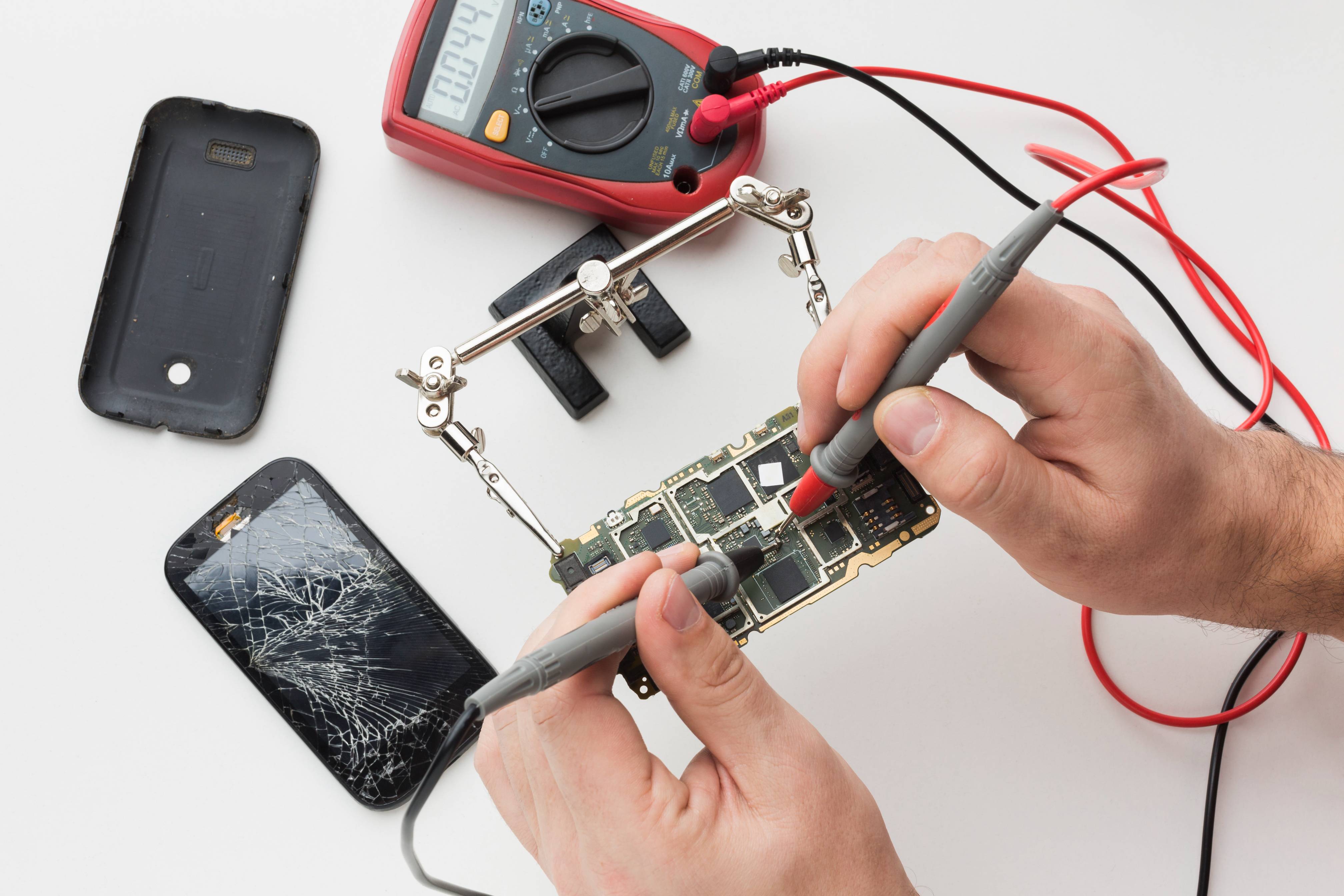
Finishing 12th is exciting, but it also brings a big question: what next? Not every student wants a three- or four-year degree, and not every degree leads straight to a job. If you want practical skills, quicker entry into the workforce, or even a chance to start your own business, a job-oriented course after 12th in Bengaluru may be the right path.
Among the many options, one skill-based career keeps growing with every new phone sold: mobile phone repairing.
Traditional degrees build theory. Job-oriented courses build skills employers and customers pay for. Here is why many students now prefer them:
Bengaluru is India's technology capital, with millions of smartphone users, thousands of electronics shops, service centres, and repair businesses, and a constant flow of new devices. That means more learning exposure, more job openings, and more opportunities to start a business after training.
Smartphones are now essential for work, study, banking, and entertainment. Cracked screens, battery problems, charging faults, and software issues are everyday problems, and people prefer trusted local technicians to fix them quickly.
A mobile phone technician course in Bengaluru teaches you to diagnose and repair these problems properly. Commonly covered topics include:
After completing a good smartphone technician course in Bengaluru, you can explore roles such as:
When you look for the best institute after 12th in Bengaluru, focus on what matters: practical training, experienced trainers, and real career support. At Magnis Institute of Technology, the mobile repairing course is designed around:
Visit the institute, meet the trainers, and see the lab setup before you decide.
Before enrolling anywhere, ask these questions:
Choosing the best course after 12th in Bengaluru is a big decision. If you enjoy gadgets, problem-solving, and working with your hands, a mobile repairing course can open the door to a stable, skill-based career, with the option to become your own boss.
Ready to start? Contact Magnis Institute of Technology to learn about upcoming batches, course details, and fees, and take your first step toward a career as a skilled mobile technician.
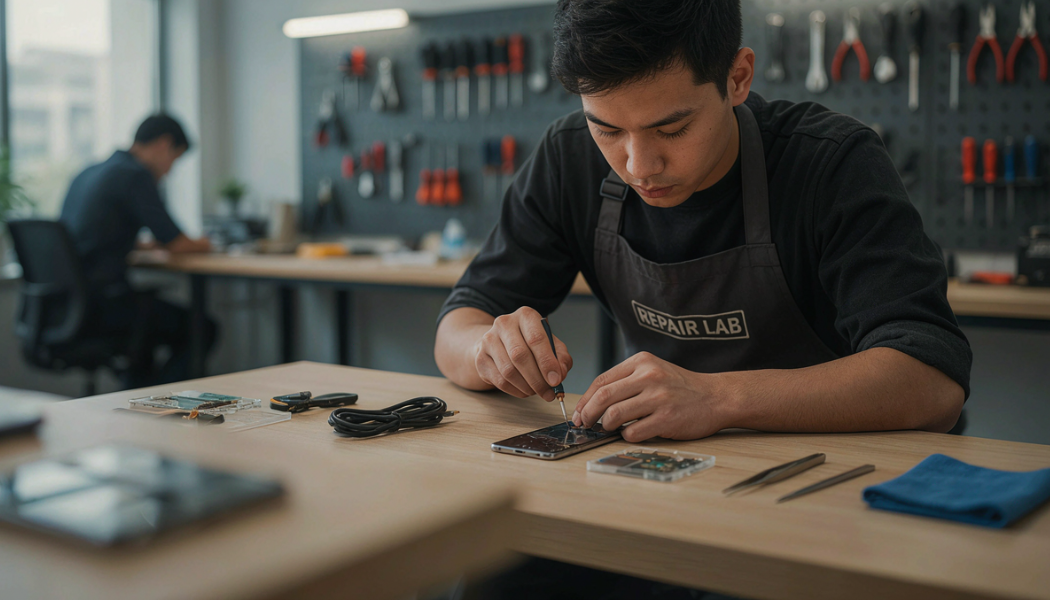
Smartphones have become an essential part of everyday life. People use mobile devices for communication, education, banking, shopping, entertainment, and business. As the number of smartphones continues to grow, the need for skilled professionals who can diagnose and repair mobile devices is also increasing.
For students, beginners, and individuals looking for a practical career option, learning mobile repair skills can create several opportunities. With proper technical knowledge and hands-on experience, mobile repair can become a valuable career path in Tirur and other parts of Kerala.
Modern smartphones are advanced electronic devices with multiple hardware and software components. Problems can range from damaged screens and charging issues to battery failures, software errors, and motherboard-related faults.
When these problems occur, customers usually prefer reliable technicians who can identify the issue and provide an effective solution. This creates a continuing need for people with practical mobile repair knowledge.
Unlike some careers that require years of academic study, mobile repair can be learned through structured technical training combined with regular practice. This makes it an interesting option for people who want to develop a job-oriented skill.
Learning mobile repair does not necessarily mean working in only one type of job. A trained technician can explore different career paths depending on their skills, experience, and interests.
The most direct career option is working as a mobile repair technician. Technicians may diagnose common device problems, replace components, perform repairs, and troubleshoot hardware and software issues.
With experience, technicians can become more confident in handling complex repairs and different smartphone models.
Mobile service centres and electronics repair businesses require technicians who understand device diagnostics and repair procedures.
A person with practical training may find opportunities in service centres where they can gain professional experience while working with different types of devices.
Many mobile phone stores and electronics businesses also provide basic repair or after-sales support. Understanding mobile hardware can therefore be useful for people working in the broader mobile and electronics industry.
Technical knowledge can also help employees communicate more effectively with customers about device problems and repair requirements.
One of the major advantages of learning mobile repair is the possibility of becoming self-employed.
After gaining sufficient technical knowledge and practical experience, a technician can consider starting a small repair shop in Tirur or another location. The business can gradually expand by offering services for different smartphone brands and device problems.
Entrepreneurship also gives technicians the opportunity to build their own customer base and develop a local reputation.
Some experienced technicians may choose to offer repair services independently rather than working in a traditional service centre.
Freelance technicians can serve customers through local networks, referrals, or home-service models where appropriate. Good communication, reliable service, and technical accuracy can help build long-term customer relationships.
Technical training is only one part of becoming a successful mobile technician. Developing the right combination of technical and professional skills is equally important.
Some useful skills include:
A technician who continues learning can stay updated as smartphone technologies and repair methods evolve.
Mobile repair is a hands-on profession. Reading about components and repair procedures is useful, but practical experience is essential for developing confidence.
During practical training, learners can become familiar with repair tools, device components, diagnostic methods, and common faults. Repeated practice can help beginners understand how different problems are identified and resolved.
Practical learning also allows students to make mistakes in a supervised environment and understand the correct repair process before working with customer devices.
Mobile repair training can be suitable for a variety of learners, including:
The field can be particularly useful for people who enjoy working with technology and solving technical problems.
Completing a course is only the beginning. Building a successful career requires continuous practice and real-world experience.
A learner can start by developing basic troubleshooting skills, practicing with different devices, gaining experience in a repair environment, and gradually taking on more complicated technical problems.
Keeping up with new smartphone technologies is also important. Devices, components, operating systems, and repair techniques continue to change, so successful technicians need to keep learning.
For people searching for Mobile Repair Training in Tirur, choosing a practical learning environment can make a significant difference. A good training program should provide exposure to mobile components, repair tools, troubleshooting methods, and real-world technical situations.
At Magnus Innovative, learners can develop practical knowledge that can help them understand the fundamentals of mobile technology and explore career opportunities in the repair industry.
The goal of technical education should not only be to complete a course but also to develop useful skills that can be applied in a professional environment.
Mobile phones are now an important part of everyday life, and skilled technicians play an important role in keeping these devices functional. For individuals in Tirur who are interested in technology, mobile repair can provide a practical route toward employment, self-employment, or further technical development.
With proper training, consistent practice, and a willingness to keep learning, mobile repair skills can become the foundation for a rewarding technical career.
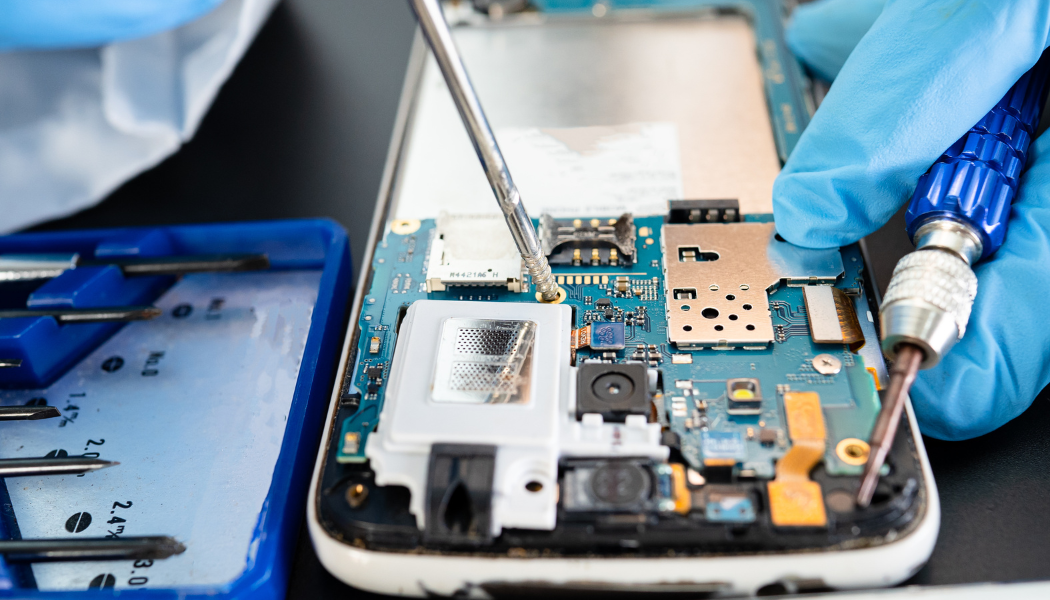
Smartphones have become an essential part of everyday life. People use them for communication, education, online payments, business, entertainment and many other activities. As dependence on smartphones continues to grow, the need for professionals who can diagnose, repair and maintain these devices is also increasing.
For students and beginners interested in electronics and technology, becoming a mobile technician in Calicut can be a practical career path. The field combines technical knowledge, hands-on work and problem-solving skills, allowing trained professionals to explore employment as well as self-employment opportunities.
A mobile technician is responsible for identifying and resolving problems affecting smartphones and other mobile devices. The work can range from simple component replacement to more complex motherboard-level diagnosis.
Depending on their training and experience, technicians may handle:
A good technician does not simply replace a damaged part. Understanding the cause of a problem and using the correct diagnostic method are important parts of professional repair work.
Calicut is a major commercial and educational centre in Kerala, with a large number of students, professionals, businesses and consumers using smartphones and other electronic devices.
As devices become more sophisticated, repair work is also becoming more technical. Modern technicians may need to understand electronic components, circuit boards, diagnostic equipment, software troubleshooting and precision repair techniques.
This creates opportunities for people who are willing to develop specialised technical skills rather than relying only on basic repair knowledge.
A successful mobile technician needs more than an interest in smartphones. Developing a combination of technical and professional skills can make a significant difference.
Understanding voltage, current, resistance, circuits and electronic components provides a strong foundation for mobile repair.
Students who understand how circuits work can approach faults more systematically instead of relying entirely on trial and error.
A technician should be able to identify major smartphone components and understand their functions. This includes batteries, connectors, ICs, cameras, speakers, microphones, displays and motherboard components.
Diagnosis is one of the most important skills in mobile repair. A technician needs to observe symptoms, perform appropriate tests and identify the probable source of a problem before attempting a repair.
Modern smartphone repairs can involve small components and delicate motherboard connections. Developing soldering and micro-soldering skills can help technicians progress from basic servicing to more advanced repair work.
Not every smartphone problem is caused by damaged hardware. Technicians may also need to understand software installation, updates, firmware-related problems and other common software issues.
Professional repair work often involves specialised tools and equipment. Learning how to use testing and diagnostic instruments correctly helps technicians identify faults more accurately.
Every repair job can present a different challenge. Good technicians develop the ability to analyse a problem logically and select an appropriate repair approach.
After developing relevant technical skills and gaining practical experience, a mobile technician can explore different career directions.
Service centres and repair businesses require technicians who can inspect devices, diagnose problems and carry out repairs according to service procedures.
Technicians can specialise in smartphone hardware and software servicing. With additional training, they may progress toward more advanced repair work.
Technicians with advanced electronics and motherboard repair skills can work on component-level faults that cannot always be solved through simple part replacement.
Experienced technicians can provide repair services independently. This can include operating a small repair centre or offering specialised services.
Entrepreneurship is another possible career path. After gaining sufficient technical and business experience, a technician can establish a mobile service and repair business.
The technical knowledge gained through mobile repair can also provide a foundation for exploring other electronics-related service roles.
Beginners do not need to know everything about electronics before starting. A structured learning path can help build skills progressively.
A useful learning journey can include:
Hands-on practice is particularly important because mobile repair involves precision and practical decision-making. Magnus Institute's Calicut branch describes its training approach as combining theoretical knowledge with practical exposure and includes smartphone engineering with chip-level repair training.
Reading about mobile repair can help beginners understand concepts, but technical skills develop through practice.
Working with real devices allows students to become familiar with:
Practical learning can also help students become more confident when dealing with unfamiliar repair situations. Magnus's existing technical training content similarly emphasises hands-on exposure as an important part of developing job-ready repair skills.
Mobile technician work can be worth considering for students who enjoy technology, electronics and practical problem-solving.
It may particularly suit students who:
However, students should research the course structure, practical facilities, curriculum and career support before choosing a training institute.
Technical training is only the beginning. A successful technician needs to continue learning because smartphone technology keeps changing.
New device designs, advanced processors, changing motherboard layouts, improved cameras, foldable phones and other technologies can introduce new repair challenges.
Technicians can strengthen their careers by:
Continuous learning can help technicians remain useful as devices and repair methods evolve.
For students interested in technology, a mobile technician career can offer an alternative to conventional career paths. It combines electronics knowledge, practical training and problem-solving, while providing different possibilities within the repair and service industry.
The first step is to understand whether this field matches your interests. If you enjoy working with electronics and want to develop practical technical expertise, structured training can help you build a strong foundation.
For students looking for mobile technician training in Calicut, Magnus Institute provides smartphone engineering and smartphone-plus-laptop engineering programmes with practical technical training.
A career in mobile technology is not limited to basic phone repairs. With the right skills, experience and continuous learning, beginners can gradually progress toward advanced technical roles or explore opportunities to build their own repair business.

Completing Plus Two is an important stage in a student's education. It is also a time when many students start thinking seriously about their future. While traditional degree programs remain a popular choice, they are not the only route to building a career.
For students in Kannur who prefer practical learning, skill-based education can provide another way to prepare for employment and self-employment. Technical training, digital skills, healthcare-related courses, design, hospitality, and other career-focused fields can help students develop abilities that are useful in the workplace.
The right choice depends on a student's interests, strengths, career goals, and willingness to develop practical skills.
Academic qualifications can provide a strong foundation, but many careers also require hands-on abilities. Practical courses allow students to spend more time learning how things work and applying that knowledge through exercises and real-world tasks.
Skill-focused education can be particularly useful for students who:
Rather than choosing a course only because it is popular, students should consider whether the skills taught match their interests and long-term plans.
Technology has become part of almost every industry, creating demand for people with different types of technical skills. Students interested in electronics, computers, smartphones, or troubleshooting can explore technical training after Plus Two.
One example is mobile and laptop repair training. Smartphones and laptops are widely used for communication, education, business, entertainment, and everyday activities. Learning how these devices function can introduce students to areas such as hardware components, diagnostics, software-related issues, troubleshooting, and repair techniques.
A student who enjoys understanding devices and solving technical problems may find this type of learning particularly interesting.
Mobile and laptop repair combines technical knowledge with hands-on practice. Beginners can gradually learn about components, common faults, diagnostic methods, repair tools, and troubleshooting procedures.
Training in this area may also help students understand different aspects of device servicing, including:
The goal of training should not simply be to memorize repair procedures. Students can benefit more when they understand why a particular problem occurs and how to identify its underlying cause.
Mobile and laptop repair is only one option. Students in Kannur can explore several other skill-based areas depending on their interests.
Students interested in computers can explore areas such as web development, graphic design, digital marketing, networking, and other technology-related skills.
These fields can provide opportunities across different industries because businesses increasingly depend on digital tools and online platforms.
Students who enjoy working with electrical systems or electronic equipment can explore technical training related to electrical work, electronics, equipment maintenance, and related areas.
These fields often require practical understanding and careful application of technical procedures.
Automobile-related training can be suitable for students who are interested in vehicles and mechanical systems. Courses may introduce learners to vehicle maintenance, diagnostics, servicing, and related technical skills.
Students with an interest in creativity can explore graphic design, photography, video editing, animation, and other visual fields. These skills can be developed through practice and portfolio building.
Hospitality, food service, travel, and related industries offer another group of career options. Students who enjoy communication and working with people may find these areas worth exploring.
There is no single course that is right for every student. Before enrolling, it is useful to consider several factors.
Think about the activities you naturally enjoy. If you like taking apart gadgets, solving technical problems, or understanding how devices work, a technical course may be worth exploring.
Find out how much of the course involves hands-on learning. Practical experience can be particularly important for technical careers.
Review the curriculum carefully. A good course should clearly explain what students will learn and what practical abilities they are expected to develop.
Some students may want employment, while others may eventually want to work independently or start a small business. Think about how the course could fit into your longer-term plans.
For practical courses, the learning environment matters. Access to relevant tools, equipment, practice sessions, and experienced instructors can make the learning process more useful.
A career should not be selected only on the basis of getting an initial job. Consider whether the skill can be developed further and whether there are opportunities to learn advanced techniques later.
One of the biggest differences between theoretical learning and practical training is the opportunity to apply knowledge.
For example, a student learning mobile and laptop repair may understand what a particular component does. However, identifying that component on an actual device, diagnosing a fault, selecting the right testing method, and carrying out a repair requires practice.
Hands-on learning can help students develop:
These abilities can become valuable as students progress from beginner-level learning to more advanced technical work.
Students do not necessarily have to decide their entire career immediately after Plus Two. A practical approach is to choose a field that interests them, learn the fundamentals, gain hands-on experience, and gradually build advanced skills.
For example, someone interested in mobile and laptop technology might begin with basic hardware knowledge, progress to diagnostics and repair, and later explore more advanced areas of electronics and device servicing.
Continuous learning is especially important in technology-related fields because devices, components, software, and repair methods continue to change.
Students in Kannur have access to different educational and training opportunities across technical and non-technical fields. The growing use of smartphones, computers, digital services, and technology in everyday life also makes technical skills relevant to many modern career paths.
Instead of selecting a course based only on its name, students can focus on what they will actually learn and how those skills can be applied.
For students who enjoy practical work, a skill-based course can be an opportunity to turn an interest into a structured learning path.
Choosing a career after Plus Two is an important decision, but students do not need to follow the same path as everyone else. Degree programs, professional courses, vocational training, and technical education can all lead to different career possibilities.
For students in Kannur who prefer hands-on learning, technical fields such as mobile and laptop repair can be worth exploring alongside other practical career options.
The most useful starting point is to understand your interests, research the available courses, examine the practical training involved, and choose a learning path that supports your long-term goals.
At Magnus Innovative, students interested in developing practical technical skills can explore training opportunities designed to build knowledge through structured learning and hands-on practice.
 Magnus Forum