
The rapid growth of smartphones, laptops, tablets, and other digital devices has created a huge demand for skilled repair professionals. Every day, people rely on these devices for work, education, communication, and entertainment. When a device stops working, they need quick and reliable repair services.
For students with technical skills, this demand presents more than just job opportunities—it offers the chance to become entrepreneurs. With the right training, practical experience, and business mindset, you can build a successful mobile and laptop repair business that provides a steady income and long-term growth.
At Magnus Innovative Institute, students are trained not only in advanced smartphone and laptop chip-level engineering but also receive guidance for career development, placement, and entrepreneurship. The institute's practical learning approach prepares students for employment as well as starting their own repair businesses.
Technology has become an essential part of everyday life. Millions of smartphones and laptops are sold each year, and every device eventually requires maintenance, repairs, upgrades, or servicing.
Some factors driving the demand include:
These trends make mobile and laptop repair one of the most promising skill-based businesses today.
The first step toward entrepreneurship is building strong technical knowledge.
A quality training program should cover:
Practical training is especially important because real repair work requires hands-on experience.
Before opening your own business, spend time working on different devices and solving real customer problems.
Practical experience helps you:
Many successful entrepreneurs begin by working in service centers before starting their own businesses.
Every successful repair business starts with a clear plan.
Think about:
A well-planned business grows faster and avoids common startup mistakes.
Offering multiple services helps attract more customers and increase revenue.
Popular repair services include:
As your business grows, you can also sell mobile accessories and spare parts.
Quality repairs require quality equipment.
Essential tools include:
Learning to use these tools during training gives you a strong advantage when starting your business.
Technical skills alone are not enough.
Customers return when they trust your service.
You can build trust by:
Satisfied customers often recommend your business to family and friends.
Today, many customers search online before choosing a repair shop.
Your business should have:
Sharing repair tips and success stories on social media can also help attract new customers.
Technology changes rapidly.
New smartphone models, laptops, processors, and repair techniques are introduced every year.
Successful entrepreneurs stay updated by:
Continuous learning keeps your business competitive.
Every new business faces challenges, but proper preparation can make a big difference.
Differentiate yourself by offering quality service, fast turnaround times, and excellent customer support.
Build relationships with reliable suppliers to ensure quality repairs.
Offer transparent pricing, clear communication, and limited warranties on repairs to build credibility.
Invest in ongoing training and modern repair equipment to handle the latest devices.
Many students believe they must find employment immediately after completing their course.
However, starting your own repair business offers several advantages:
With dedication and quality service, even a small repair shop can grow into a successful business.
Magnus Innovative Institute focuses on developing industry-ready professionals through practical, hands-on training in smartphone and laptop chip-level engineering. Students work with modern diagnostic tools and live repair scenarios to gain real-world experience.
In addition to technical education, the institute offers placement assistance and entrepreneurship support, including guidance on setting up a repair center, business planning, vendor connections, and marketing strategies. Many graduates have secured positions in service centers or launched successful repair businesses in India and abroad.
Turning your technical skills into a successful business is an achievable goal with the right training, practical experience, and determination. The growing demand for mobile and laptop repair services creates excellent opportunities for students who want to become entrepreneurs instead of job seekers.
By mastering advanced repair techniques, delivering quality service, and continuously upgrading your skills, you can build a profitable business that serves customers while creating a rewarding career for yourself.
Whether your dream is to own a local repair center or expand into multiple branches, your entrepreneurial journey can begin with the right education and practical training.
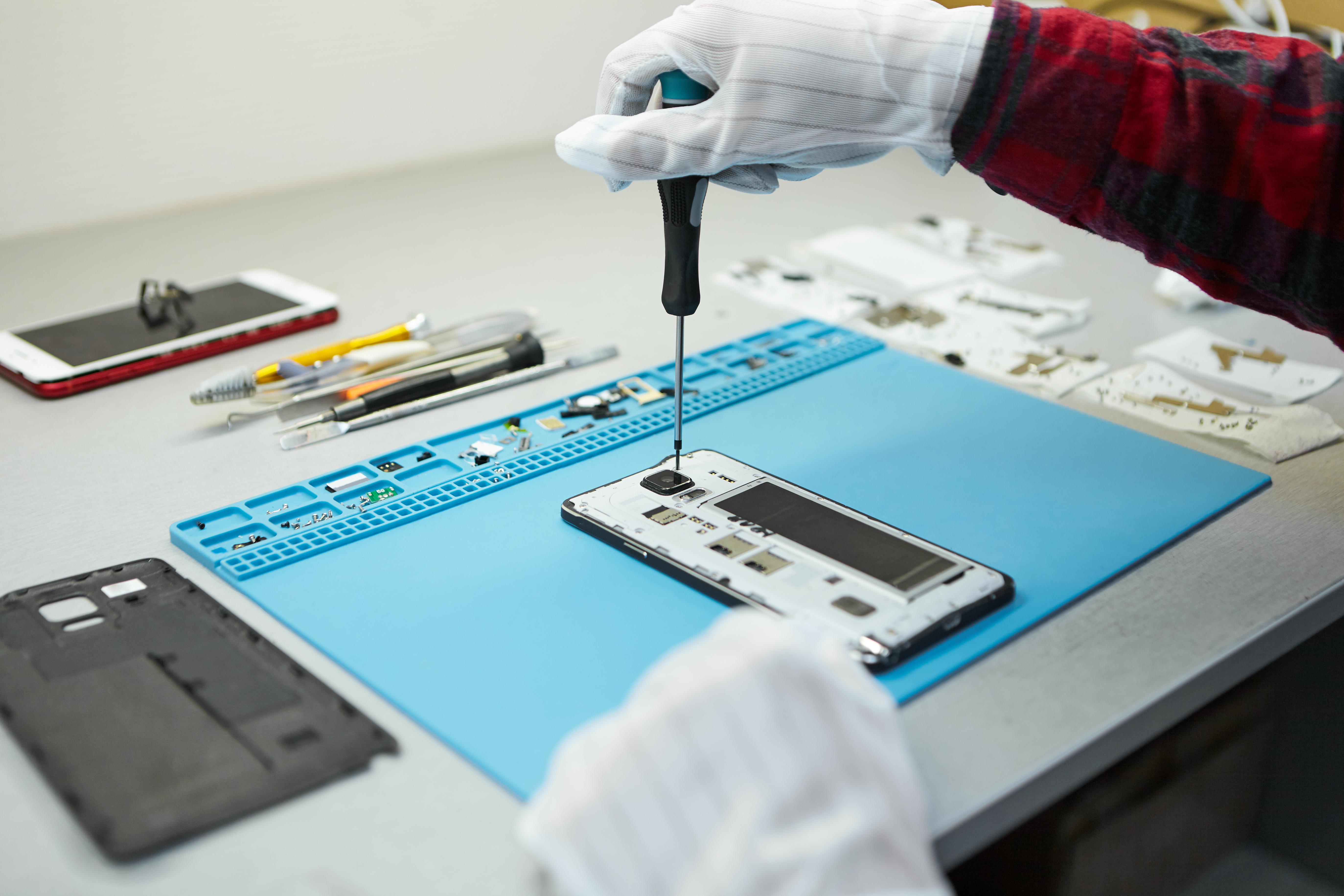
What if we told you that a cracked screen could become your career opportunity?
A few years ago, when a smartphone broke, most people simply bought a new one.
Today, that has changed.
Instead of replacing expensive smartphones, millions of people are choosing to repair their devices. With flagship smartphones now costing anywhere from ₹40,000 to over ₹1,50,000, repairing a phone is often the smarter and more affordable option.
This shift is creating a massive demand for skilled Mobile Repair Technicians and Chip-Level Engineers around the world.
If you're looking for a career with real opportunities after Plus Two, this trend is worth paying attention to.
Smartphones have become an essential part of our daily lives. From online banking and digital payments to education, work, and entertainment, everything depends on a smartphone.
As a result, people no longer treat their phones as disposable devices.
Instead of upgrading every year, users are keeping their phones longer and choosing professional repairs when problems arise.
This change has made the mobile repair industry one of the fastest-growing technical sectors worldwide.
There are several reasons behind this growing trend.
1. Smartphones Are More Expensive Than Ever
Premium smartphones now cost as much as laptops.
For most people, replacing a damaged screen or battery is far more affordable than buying a brand-new phone.
2. People Keep Their Phones Longer
Consumers are now using their smartphones for four to five years instead of upgrading every two years.
As phones age, they naturally require maintenance and repairs, creating continuous demand for skilled technicians.
3. Modern Phones Require Professional Skills
Today's smartphones are equipped with advanced technologies such as:
Repairing these devices requires specialized chip-level knowledge and practical expertise.
Companies are actively looking for professionals with skills such as:
These technical skills are highly valued by employers across the industry.
As the smartphone market continues to grow, so does the demand for skilled technicians.
Career opportunities include:
There are also growing opportunities in Gulf countries and other international markets for qualified mobile repair professionals.
Many students believe a traditional degree is the only path to success.
However, industries today are looking for professionals with practical, job-ready skills.
Technical education offers:
For students who enjoy technology, mobile repair and chip-level engineering offer an exciting and rewarding career path.
At Magnus Institute, we focus on preparing students for real-world careers—not just examinations.
Our training includes:
Our goal is to transform students into confident, industry-ready professionals.
The rise of AI smartphones, foldable devices, 5G technology, and premium electronics is increasing the need for highly skilled mobile technicians.
Technology will continue to evolve—but every new innovation creates new opportunities for trained professionals.
Those who develop technical skills today will be better prepared for tomorrow's job market.
If you're searching for a career-oriented technical course after Plus Two, now is the perfect time to build a future in one of the world's fastest-growing industries.
Don't just use technology—learn how to build, repair, and master it.
Join Magnus Institute today and turn your passion for technology into a successful career.

The job market is changing rapidly, and employers are looking for candidates with practical skills rather than just academic qualifications. For students who want to begin earning quickly and build a successful career, technical job guarantee courses offer an excellent opportunity. These courses combine hands-on training, industry-relevant knowledge, and placement support, helping students become job-ready in a short period.
Whether you have completed Plus Two, a diploma, or graduation, choosing a technical course can help you gain valuable skills and secure a promising career in the growing technology sector.
Technical job guarantee courses are career-focused training programs designed to equip students with practical skills that match industry requirements. Unlike traditional education, these courses emphasize real-world applications, enabling students to work confidently from their first day on the job.
Many reputed institutes also provide placement assistance, interview preparation, and career guidance, making the transition from training to employment much easier.
Students today are looking for courses that provide both knowledge and career opportunities. Technical training programs have become increasingly popular because they offer several advantages.
Students spend more time working with tools, equipment, and real devices instead of only studying theory.
Most technical courses can be completed within a few months, allowing students to enter the workforce much earlier than those pursuing long-term degree programs.
The demand for skilled technicians continues to rise due to the increasing use of smartphones, laptops, and electronic devices in homes and businesses.
Companies prefer candidates who already possess practical skills, reducing the need for extensive on-the-job training.
The smartphone industry is expanding every year, creating a constant demand for skilled repair professionals. Modern smartphones require advanced repair techniques, making trained technicians highly valuable.
During this course, students typically learn:
After completing the course, students can work in authorized service centres, mobile repair companies, or start their own repair business.
Businesses, educational institutions, and individuals rely heavily on laptops, increasing the demand for qualified laptop technicians.
Course highlights include:
Professionals with laptop repair skills enjoy excellent employment opportunities in computer service centres and IT support companies.
Learning both smartphone and laptop repair gives students a wider range of career options.
This comprehensive program covers:
Since graduates can service multiple devices, they become more attractive to employers and have greater earning potential.
Electronic devices are used everywhere—from homes and hospitals to offices and industries. Skilled electronics technicians are required to maintain and repair these systems.
Students gain knowledge in:
This course is suitable for candidates interested in electronics servicing and maintenance careers.
A quality technical course helps students develop both technical and professional abilities.
These include:
These transferable skills contribute to long-term career success.
Technical training opens the door to diverse employment opportunities across the electronics and technology sectors.
Graduates may work as:
With experience, professionals can move into supervisory positions or establish successful service centres of their own.
Technical careers require more than theoretical knowledge. Employers expect technicians to identify problems, use diagnostic equipment, and complete repairs efficiently.
Practical training enables students to:
Institutes that provide modern laboratories and live repair practice help students become industry-ready.
Selecting the right training institute plays an important role in career success. A good institute should provide quality education along with career support.
Magnus Innovative offers students several advantages:
The training methodology focuses on practical experience, ensuring students graduate with the confidence to work in professional environments.
Before enrolling in any program, consider the following:
Making an informed choice will help you build a successful career.
Technology continues to create exciting career opportunities for skilled professionals. Instead of waiting years to begin your career, you can gain practical expertise through a technical training program and start earning much sooner.
If you're passionate about electronics, problem-solving, and technology, enrolling in a technical job guarantee course can be the first step toward a rewarding future. With industry-focused training, hands-on experience, and placement support, Magnus Innovative helps students develop the skills needed to succeed in today's competitive job market.
Whether your goal is to secure employment with a leading company or establish your own repair business, investing in practical technical education can set you on the path to long-term professional success.

"The ₹15,000 smartphone you wanted last year now costs ₹18,000. But why?"
If you've recently checked the price of a new smartphone, you may have noticed something surprising—even budget smartphones are getting more expensive.
Whether it's Samsung, vivo, Xiaomi, OPPO, realme, or other leading brands, prices are rising across the market. But this isn't just another price hike. It's a sign of a major transformation happening inside the global smartphone industry.
So, what's really driving these price increases? Let's find out.
Artificial Intelligence (AI) isn't just making smartphones smarter—it's also making them more expensive.
Modern smartphones now include AI-powered features like:
To support these features, smartphones need faster processors, more RAM, and larger storage. These advanced components cost significantly more to manufacture than previous generations.
Every smartphone depends on two essential components:
Today, these memory chips are in extremely high demand because AI data centers and cloud computing companies require massive amounts of them.
As chip manufacturers prioritize AI infrastructure, fewer memory chips are available for smartphone production. This reduced supply has pushed prices higher, making smartphones more expensive to build.
Until recently, budget smartphones offered impressive features at affordable prices.
Now, manufacturers face a difficult choice:
Most brands have chosen to increase prices while maintaining the quality customers expect.
Features that were once available only in flagship smartphones are now appearing in budget models.
These include:
While this gives consumers better technology, it also increases manufacturing costs.
Smartphone pricing isn't determined by hardware alone.
Manufacturers also invest heavily in:
All of these factors contribute to the final retail price.
Instead of replacing their smartphones every year, many users are choosing to repair and maintain their existing devices.
This shift is creating a growing demand for skilled professionals who can diagnose, repair, and service modern smartphones.
As smartphones become more advanced, repairing them also requires advanced technical expertise.
Every new smartphone contains powerful processors, sophisticated chipsets, AI-powered hardware, and complex electronic components.
Behind every smartphone is a team of skilled professionals responsible for manufacturing, diagnosing, repairing, and maintaining these devices.
With India's electronics and semiconductor industries expanding rapidly, the need for trained smartphone hardware and chip-level engineers continues to grow.
For students looking for a practical, future-focused career, this is more than just a trend—it's an opportunity.
Technology keeps evolving, but one thing remains constant—the demand for skilled professionals.
At Magnus Institute, students receive practical, industry-oriented training in smartphone and laptop chip-level engineering, preparing them with the technical skills required in today's electronics industry.
As smartphones become smarter and more sophisticated, the world needs experts who know how they work.
Don't just use technology. Learn to build, repair, and master it.
The rising price of smartphones isn't simply about inflation. It's the result of AI innovation, advanced hardware, expensive memory chips, global supply-chain challenges, and the increasing value packed into every new device.
While smartphones are becoming more expensive, they are also creating exciting career opportunities for the next generation of skilled technicians and electronics professionals.
The future belongs to those who understand technology—not just those who use it.

Smartphones have become an essential part of everyday life, creating a constant demand for skilled technicians who can diagnose, repair, and maintain these devices. As technology advances, businesses and consumers increasingly rely on professionals who understand both hardware and software troubleshooting. Choosing a structured training program is one of the most effective ways to enter this growing industry.
If you are passionate about technology and want a practical, job-oriented career, becoming a professional smartphone technician can open doors to employment, entrepreneurship, and even international opportunities. Institutes like Magnus Innovative Institute provide industry-focused smartphone chip-level engineering and combined smartphone-laptop repair programs designed to prepare students for real-world technical careers.
The smartphone repair industry continues to expand because people depend on their devices for communication, education, business, and entertainment. Instead of replacing expensive smartphones, many customers prefer professional repairs.
Some of the key benefits of this career include:
Unlike many traditional career paths, smartphone repair focuses on practical skills that employers actively seek.
Every successful smartphone technician starts with a strong understanding of electronics. Professional training should include:
These basics help students diagnose problems accurately rather than relying on trial and error.
Modern smartphones contain highly integrated motherboards. Basic repair knowledge is no longer enough.
Professional technicians should learn:
Chip-level expertise allows technicians to solve complex hardware issues that many local repair shops cannot handle.
Technical knowledge alone is not enough. Practical training builds confidence and improves diagnostic accuracy.
A quality smartphone training institute should provide:
Magnus Innovative Institute emphasizes practical learning through advanced laboratories, helping students develop job-ready technical skills.
Many smartphone problems are software-related rather than hardware failures.
A professional technician should understand:
Having expertise in both hardware and software significantly increases career opportunities.
The smartphone industry evolves rapidly. Every year brings new processors, display technologies, battery systems, and repair techniques.
Successful technicians continuously learn about:
Continuous learning helps technicians remain competitive in the market.
Technical expertise should be supported by excellent customer service.
Successful technicians know how to:
Satisfied customers often recommend reliable technicians to friends and family, helping grow your reputation.
Completing a recognized smartphone repair course demonstrates your technical competency.
Certification can help you:
Professional certification reflects your commitment to quality workmanship.
After completing professional smartphone technician training, several career paths become available.
Authorized and independent service centers regularly hire trained smartphone technicians to handle diagnostics and repairs.
Many professionals specialize in advanced chip-level motherboard repairs, earning higher incomes due to their expertise.
With sufficient experience, technicians can establish their own mobile repair business, offering repair services, accessories, and device maintenance.
Experienced professionals may transition into teaching smartphone repair skills at technical institutes.
Countries around the world require qualified electronics repair technicians, making smartphone repair a valuable skill for overseas careers.
Selecting the right institute plays a major role in your career success.
Look for an institute that offers:
Magnus Innovative Institute offers specialized Smartphone Chip-Level Engineering and Smartphone + Laptop Engineering courses through multiple training centers, combining practical education with placement-focused support.
Many successful technicians eventually become entrepreneurs.
A smartphone repair business can expand into:
With experience and customer trust, small repair businesses can grow into profitable technology service centers.
Building a successful career as a professional smartphone technician requires more than learning basic repairs. It demands practical experience, advanced chip-level skills, continuous learning, and strong customer service. By choosing a professional training institute that focuses on hands-on education and industry-ready skills, you can prepare yourself for rewarding opportunities in the rapidly growing mobile technology sector.
Whether your goal is to secure employment, work abroad, or start your own repair business, investing in quality smartphone repair training is the first step toward a stable and successful technical career.
 Magnus Forum