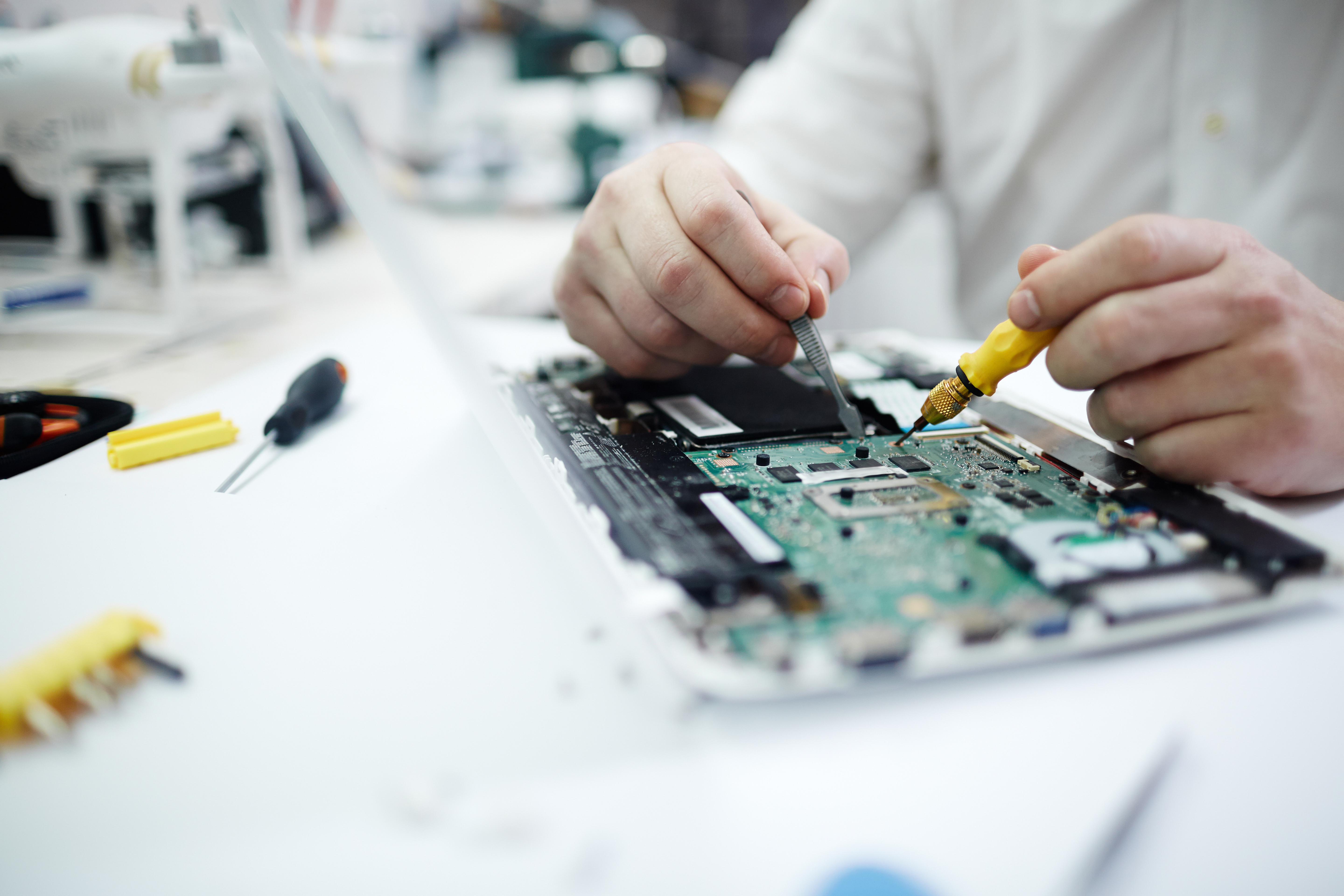
We carry them everywhere, rely on them for everything, and panic the moment their screens go black. Modern smartphones are absolute marvels of engineering—housing billions of transistors, delicate sensors, and high-density logic boards within a frame just a few millimeters thick.
When a phone stops charging, drops into water, or refuses to boot up, most people see a mystery. But inside a modern repair lab, that mystery transforms into a systematic engineering process.
If you’ve ever wondered what actually happens behind the workbench, let’s step into the shoes of a beginner at Magnus Institute and trace the journey of a broken smartphone from initial diagnosis to a flawless repair.
The repair journey doesn't start with a screwdriver; it starts with systematic intake.
Before opening any device, a technician must establish a baseline:
Understanding logical intake prevents misdiagnosis and saves hours of unnecessary troubleshooting down the line.
Step inside a professional lab like the ones at Magnus Institute, and the first thing you’ll notice is the emphasis on safety—for both the technician and the microchips.
Smartphones contain sensitive Integrated Circuits (ICs) that can be instantly destroyed by unseen Static Electricity. Before opening a device, technicians work on Electrostatic Discharge (ESD) safe mats, use grounded wrist straps, and work with specialized non-conductive pry tools (spudgers) to safely disconnect internal battery lines.
Opening a modern flagship device requires heat, precision, and patience.
Technicians use dedicated heat stations to soften water-resistant adhesives around glass back panels and displays. Once inside, the layout resembles a tiny, high-tech city:
A structured magnetic screw mat keeps every tiny screw in order—because putting a 1.4mm screw into a 1.2mm thread hole can cause permanent trace damage on the motherboard.
When the problem isn't as simple as a cracked screen or an aging battery, technicians step into deep troubleshooting:
This is where true engineering expertise comes to life. Basic repair shops stop at swapping modular parts, but advanced labs perform chip-level micro-soldering.
Under microscopic guidance, technicians use precision hot air rework stations and soldering irons fine enough to work on components smaller than a grain of rice:
Once the hardware issue is resolved, the device undergoes rigorous Quality Control (QC):
Only when all check-boxes are green is the smartphone sealed with fresh water-resistant adhesive and cleared for delivery.
Understanding what happens inside a repair lab is the first step toward mastering it. In an era where smartphone usage grows exponentially, skilled technicians who can perform precise, chip-level troubleshooting are in high demand worldwide.
At Magnus Institute of Technology, our TSSC-affiliated Smartphone Engineering programs take you from complete beginner to industry-certified expert. With state-of-the-art diagnostic equipment, hands-on micro-soldering labs, and 100% placement support, you don't just learn how to swap parts—you learn how devices work from the inside out.
Explore our Smartphone Engineering & Micro-Soldering Courses today at Magnus Institute!
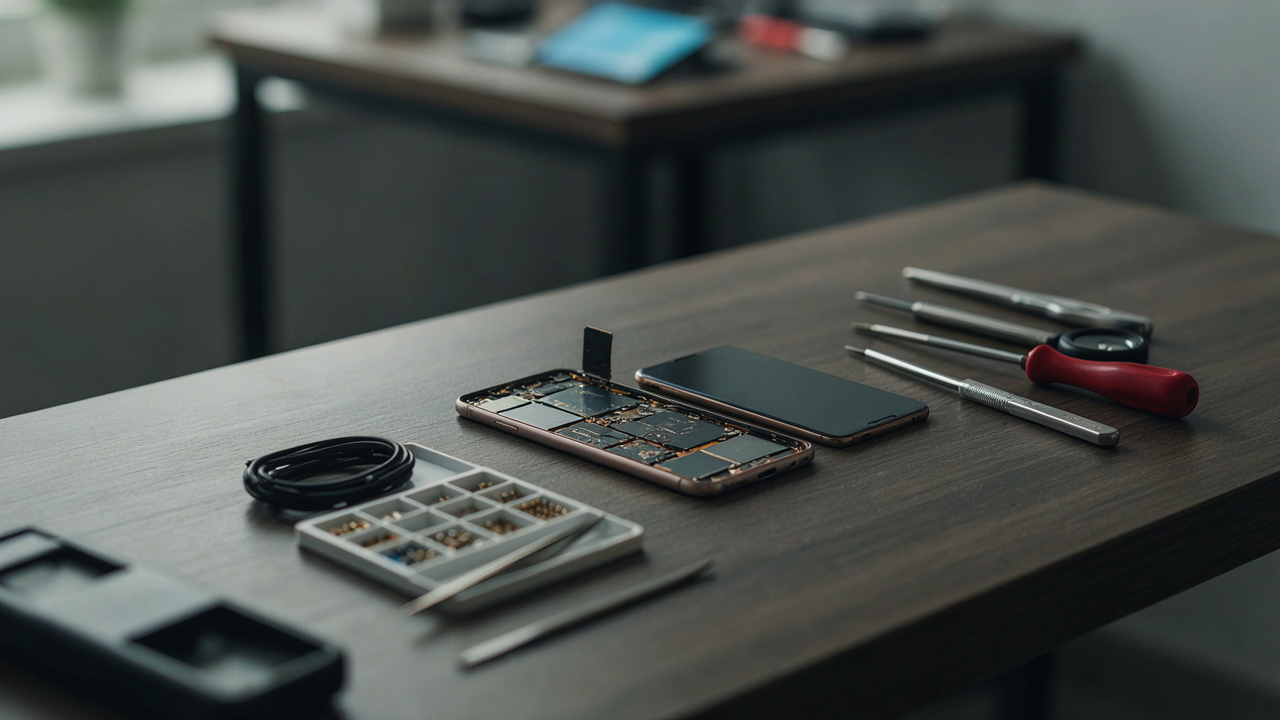
Smartphones are becoming more powerful, sophisticated and deeply integrated into everyday life. From mobile banking and communication to education, business and entertainment, people increasingly depend on their devices. As smartphone technology advances, the repair industry is changing alongside it.
In 2026, smartphone repair is no longer limited to replacing screens, batteries or charging ports. Modern technicians increasingly need knowledge of software troubleshooting, motherboard diagnostics, microsoldering, advanced testing equipment and newer device architectures.
At the same time, developments around repairability, refurbishment and sustainability are creating new opportunities for the repair ecosystem. India's Department of Consumer Affairs has also developed a Repairability Index framework specifically covering smartphones and tablets, with the aim of improving transparency around repairability and encouraging longer product use.
For anyone considering a career in smartphone repair, understanding these changes can help identify the skills that will remain relevant in the years ahead.
Earlier generations of mobile phones were comparatively straightforward to service. Technicians could often diagnose problems using basic tools and replace individual components without dealing with highly integrated boards.
Modern smartphones are different.
Compact motherboard designs, advanced processors, OLED displays, multiple cameras, biometric systems, sophisticated charging circuits and tightly integrated components have made professional diagnosis more important.
Repairability also varies significantly between devices. iFixit's current repairability information shows that factors such as adhesives, screw types, component accessibility and the availability of repair parts and instructions can affect how easily a smartphone can be serviced.
This means the future technician will need to understand not only how to replace a component, but also why a component has failed and how the surrounding circuit works.
Artificial intelligence is becoming increasingly relevant to electronics troubleshooting.
AI-based tools can potentially assist technicians by analysing diagnostic information, identifying patterns and helping narrow down possible faults. Emerging repair tools are already exploring AI applications for board-level troubleshooting and microsoldering workflows.
However, AI is unlikely to eliminate the need for skilled technicians.
A diagnostic system may help identify a possible fault, but technicians still need to understand circuit behaviour, measure components, inspect boards and safely carry out repairs.
This makes AI literacy combined with electronics knowledge an increasingly useful skill combination.
As smartphones become thinner and more integrated, board-level faults can become more challenging to diagnose.
Instead of replacing an entire motherboard, skilled technicians may be able to identify and repair faults involving:
Microsoldering and chip-level diagnostics therefore remain important areas for technicians who want to progress beyond basic smartphone servicing.
Microsoldering involves working with very small electronic components and connections on printed circuit boards.
Professional repair work can require skills such as:
The increasing complexity of smartphone motherboards makes practical experience particularly valuable.
A technician who understands circuit diagrams and diagnostic measurements can approach a problem systematically instead of depending entirely on trial-and-error component replacement.
Foldable smartphones introduce technologies that are different from conventional smartphone designs.
Flexible displays, hinges, multiple display assemblies, flex cables and compact internal layouts can require specialised repair knowledge.
A foldable device may therefore require technicians to understand:
As foldable technology develops, technicians who understand these architectures may need to continually update their repair techniques.
Hardware and software can no longer be treated as completely separate areas of smartphone servicing.
A device that fails to boot, experiences repeated crashes or loses functionality may have a software-related problem rather than a straightforward hardware failure.
Modern technicians can benefit from understanding areas such as:
Magnus Innovative's existing career guidance for smartphone technicians similarly highlights the importance of developing both hardware and software troubleshooting abilities.
Repairability is increasingly being discussed as part of product design and consumer choice.
In India, a government committee's recommendations for a Repairability Index cover smartphones and tablets. The framework considers factors such as access to repair information, spare-parts availability, software updates, tools and fasteners, and ease of disassembly.
This development could increase awareness among consumers about whether devices can be maintained and repaired during their useful life.
For technicians, it also highlights the importance of understanding manufacturer repair information, compatible components and proper repair procedures.
The smartphone industry is not limited to new-device sales. Refurbishment and secondary-market devices are also becoming important parts of the electronics ecosystem.
Recent reporting indicates that refurbished smartphones are gaining traction in India, with higher-value devices becoming an increasingly important part of the refurbished market.
Refurbishment creates demand for professionals who can:
This gives repair professionals opportunities beyond traditional walk-in repair shops.
Professional smartphone repair increasingly depends on specialised equipment.
Depending on the type of repair, technicians may work with:
Knowing how to use these tools correctly can make diagnosis more systematic and reduce unnecessary component replacement.
The technology itself is only part of the equation. A technician must understand what the readings mean and how to translate them into a repair decision.
Repair can extend the useful life of electronic devices and reduce the need for premature replacement.
Government initiatives around repairability in India specifically recognise the importance of product longevity, access to repair information and availability of spare parts.
For the repair industry, this creates a broader role.
Technicians are not simply fixing damaged devices. They can contribute to extending device lifecycles through responsible diagnosis, component replacement, refurbishment and maintenance.
The smartphone technician of the future will need a broader skill set than someone trained only in basic component replacement.
Important areas include:
Understanding voltage, current, resistance, circuits and electronic components provides the foundation for advanced diagnosis.
Technicians should understand displays, batteries, cameras, charging systems, speakers, microphones, sensors and motherboard architecture.
Advanced technicians can develop skills in component-level diagnosis, IC replacement and microsoldering.
Firmware, operating-system problems and software-related faults are increasingly relevant to smartphone servicing.
Technicians need practical experience using testing and repair equipment safely and accurately.
Continuous learning is important as foldables, advanced cameras, AI-enabled devices and new processor architectures enter the market.
Technical knowledge needs to be supported by professional communication, transparent diagnosis and clear explanations of repair options.
Smartphone technology changes quickly.
A technician trained several years ago may encounter unfamiliar motherboard layouts, new processors, different display assemblies or new software-security systems when working on current devices.
For this reason, professional development should continue throughout a technician's career.
Magnus Innovative's recent career-focused content also highlights the importance of keeping up with foldable smartphones, 5G technology, AI-enabled devices, advanced camera systems and changing motherboard designs.
The evolving repair ecosystem can create several career paths for people with the right technical skills.
Depending on their experience, technicians may explore roles such as:
Entrepreneurship is another possible route. Experienced technicians can establish independent repair centres, refurbishment businesses or specialised board-level repair services.
A practical training program can help students move from basic electronics concepts to more advanced repair techniques.
A structured learning path can include:
Hands-on practice is particularly important because smartphone repair involves precision work that cannot be mastered through theory alone.
The smartphone repair industry is likely to become increasingly technical rather than disappearing as devices become more advanced.
AI-assisted diagnostics, repairability initiatives, refurbishment, sophisticated hardware and increasingly complex smartphones are changing what professional repair work looks like.
For technicians, this means that continuous learning will be one of the most valuable career skills.
Basic repair knowledge can provide a starting point, but advanced electronics, chip-level repair, software troubleshooting and diagnostic expertise can help technicians adapt as smartphone technology changes.
The smartphone repair industry in 2026 is moving beyond traditional screen and battery replacement. Modern repair increasingly involves advanced diagnostics, software troubleshooting, microsoldering, board-level repair and knowledge of emerging smartphone technologies.
At the same time, developments in repairability and refurbishment are bringing greater attention to extending the useful life of electronic devices.
For aspiring technicians, the future belongs to those who are willing to keep learning. Building strong electronics fundamentals, gaining hands-on experience and developing advanced smartphone repair skills can help prepare technicians for the changing demands of the industry.
Magnus Innovative focuses on practical technical education designed to help aspiring professionals develop smartphone and laptop repair skills for modern electronics careers. Its training approach includes smartphone and laptop chip-level engineering, practical learning and career-oriented technical development.

Smartphones and laptops have become essential for communication, education, employment, business and entertainment. When these devices develop display, charging, software or motherboard-related issues, users need trained technicians who can diagnose and repair them efficiently.
This growing dependence on digital devices has created promising career opportunities in smartphone and laptop chip-level engineering. With practical training and industry-relevant skills, students can explore employment, freelancing and entrepreneurship in the expanding electronics service industry.
While the employment market continues to change, professionals with practical technical skills remain important across many industries. Smartphones and laptops require regular maintenance, software support and specialised hardware repair.
Trained technicians can explore opportunities in:
These opportunities make chip-level engineering a suitable career option for students interested in technology and hands-on technical work.
Smartphone chip-level engineering focuses on identifying and resolving faults at the motherboard and component level. It goes beyond basic part replacement and requires a clear understanding of electronic circuits, diagnostic procedures and precision repair techniques.
Students may learn:
These skills can prepare students to handle a wide variety of smartphone hardware and software problems.
Laptop chip-level engineering involves diagnosing hardware and motherboard faults across laptops and MacBooks. It requires knowledge of power sections, BIOS systems, internal components and signal flow.
Training may cover:
Practical exposure helps students develop the confidence required to work with different device models and repair situations.
Professional training in smartphone and laptop chip-level engineering can open several career paths.
|
Career option |
Primary responsibilities |
Important skills |
|
Chip-Level Technician |
Diagnose motherboard faults and perform component-level repairs |
Circuit analysis, soldering and fault tracing |
|
Service Centre Technician |
Handle device inspection, maintenance and repair |
Hardware diagnosis, software support and customer service |
|
IT Hardware Support Technician |
Maintain laptops, computers and related workplace hardware |
Installation, maintenance and troubleshooting |
|
Refurbishing Technician |
Repair and restore used devices for resale |
Testing, repair and quality inspection |
|
Freelance Technician |
Provide independent or doorstep repair services |
Technical ability, communication and time management |
|
Service Centre Owner |
Manage a repair shop or multi-brand service centre |
Technical, business and customer-management skills |
Career growth depends on practical ability, experience, continuous learning, location and market demand.
Chip-level engineering is not limited to salaried employment. Skilled technicians can also build their own businesses after gaining sufficient technical knowledge and practical experience.
Possible business opportunities include:
Technical expertise alone is not enough to build a successful business. Entrepreneurs must also develop customer service, inventory management, pricing, marketing and financial-planning skills.
Magnus Institute of Technology offers job-oriented training in Smartphone and Laptop Chip-Level Engineering. Its programs are designed to help students develop practical skills through hands-on laboratory sessions, modern diagnostic tools and industry-focused learning.
Students receive exposure to:
The program is suitable for students who have completed or attempted Plus Two, regardless of their academic stream. Previous technical experience is not essential, as students can begin by learning the fundamentals before progressing to advanced repair techniques.
The continued use of smartphones, laptops and other digital devices creates an ongoing need for trained repair professionals. Students who develop practical expertise and keep themselves updated with changing technologies can explore employment, freelancing and entrepreneurship within this industry.
Magnus Institute of Technology helps aspiring technicians build the technical knowledge, practical confidence and professional skills required to begin their journey.
Visit your nearest Magnus Institute of Technology branch to attend career counselling and learn more about the Smartphone and Laptop Chip-Level Engineering program.

Foldable and flip smartphones have introduced a new generation of mobile technology. Unlike conventional smartphones, these devices combine flexible displays, folding mechanisms, specialized connectors, compact internal components, and complex motherboard designs. As a result, repairing them requires technicians to understand more than standard smartphone servicing.
For anyone planning to build advanced technical skills, foldable smartphone repair training can provide an opportunity to understand the specialized components and diagnostic techniques used with these devices. A structured program can help technicians develop the precision, patience, and troubleshooting skills needed to work with modern smartphones.
The first step in learning foldable phone repair is understanding how these devices differ from conventional smartphones.
Foldable and flip models may include components such as:
Understanding how these components interact is important before attempting any repair. A technician needs to identify the source of a problem rather than immediately replacing a component.
Diagnosis is one of the most important skills for a professional smartphone technician.
A foldable phone may show symptoms such as display flickering, touch problems, charging issues, unexpected shutdowns, or connectivity faults. The visible symptom does not always indicate the exact component causing the problem.
Technicians therefore need to develop a systematic approach to diagnosis. This can include visual inspection, testing components, checking connections, examining circuit paths, and using appropriate measuring equipment.
Flexible displays require careful handling because they are constructed differently from conventional rigid smartphone screens.
During training, technicians can learn about display construction, connectors, flex cables, and safe handling procedures. Understanding these components helps reduce the risk of unnecessary damage during disassembly and repair.
Precision is particularly important when working around delicate display assemblies.
Flex cables play an important role in foldable devices because components on different sections of the phone need to communicate while the device opens and closes.
A technician should understand how to inspect flex cables and connectors for visible damage, loose connections, corrosion, or other faults. Learning how these connections function can also help technicians trace problems more systematically.
The hinge is one of the defining features of a foldable smartphone. It allows the device to open and close while protecting and positioning internal components.
Repair training can introduce technicians to the relationship between the hinge mechanism and nearby components. Understanding the structure of a particular device is important before attempting disassembly, because excessive force or incorrect handling can affect sensitive internal parts.
Advanced smartphone repair often requires working with extremely small components. Foldable devices can make precision even more important because of their compact internal construction.
Micro-soldering skills can help technicians work with small components, connectors, and circuit-board sections. Students need to learn how to control heat, handle tools accurately, and avoid damaging surrounding components.
Practical training is particularly useful for developing this type of precision because these techniques require repeated hands-on practice.
Modern smartphones rely heavily on complex motherboards. When a problem cannot be resolved through basic component replacement, technicians may need to investigate the board itself.
Motherboard-level troubleshooting can involve understanding circuit paths, components, ICs, power sections, signal lines, and connections. These fundamentals form an important part of advanced smartphone chip-level engineering.
Magnus Innovative's published training information highlights smartphone architecture, component repair, fault diagnosis, and advanced service techniques as areas of technical learning.
A professional technician should know how to use testing equipment correctly.
Depending on the training curriculum, students may work with tools such as:
The objective is not simply to learn how each tool works but to understand when and why it should be used during diagnosis.
Not every smartphone problem is caused by damaged hardware.
Foldable devices can also experience software-related problems, system errors, firmware issues, update failures, or boot-related problems. A technician therefore benefits from understanding both hardware and software troubleshooting.
Knowing how to distinguish between software and hardware symptoms can prevent unnecessary component replacement.
Disassembly is an essential technical skill, particularly for complex smartphones.
Technicians need to understand the correct sequence for opening a device, disconnecting components, protecting sensitive parts, and reassembling the phone correctly.
Foldable phones can require additional care because of their flexible displays, hinge mechanisms, and internal connections. Training with real devices can help students develop better hand control and repair discipline.
A skilled technician does more than replace damaged parts. They investigate why the device is malfunctioning.
Problem-solving involves observing symptoms, forming possible explanations, performing appropriate tests, and using the results to identify the actual fault.
This analytical approach is especially valuable when dealing with complicated motherboard or intermittent faults.
Reading about foldable smartphone technology can provide theoretical knowledge, but repair skills develop through practice.
Hands-on training allows learners to become familiar with real components, repair tools, circuit boards, and diagnostic situations. Magnus Innovative emphasizes practical learning through its mobile and laptop repair programs, including hands-on exposure to repair tools and real devices.
For advanced repair techniques such as micro-soldering and motherboard troubleshooting, repeated practical work can help learners improve accuracy and confidence.
Smartphone technology continues to evolve, and foldable devices represent one of the major changes in smartphone design. Technicians who want to work with newer devices need to continuously update their technical knowledge.
Learning about flexible displays, hinges, flex connections, motherboard architecture, precision soldering, and advanced diagnosis can provide a broader foundation for modern smartphone repair.
For students interested in developing advanced smartphone repair skills, Magnus Innovative, Mobile Repair Training Institute Kerala offers programs focused on Smartphone Chip-Level Engineering and Smartphone + Laptop Chip-Level Engineering. Its training approach combines technical concepts with practical skill development.
Learning advanced smartphone repair is not only about knowing how to replace components. It involves understanding electronic systems, diagnosing faults accurately, handling delicate components, and developing the precision required for professional repair work.
Foldable smartphone repair requires a combination of electronics knowledge, hardware diagnosis, precision handling, micro-soldering, motherboard troubleshooting, and software understanding. As smartphone designs become more sophisticated, technicians need to continuously develop their technical abilities.
A structured foldable smartphone repair training program can help learners build the foundation needed to understand these technologies and progress toward advanced smartphone repair skills. With consistent hands-on practice and a strong understanding of electronics, aspiring technicians can prepare themselves to work with the increasingly complex devices of today's smartphone industry.

Two flagship phones. Two completely different approaches to smartphone engineering. One question everyone is asking: iPhone 18 Pro or Samsung Galaxy S26 Ultra?
The battle between Apple and Samsung has entered a new generation.
With Apple launching the iPhone 18 Pro and Samsung already competing at the premium end with the Galaxy S26 Ultra, smartphone users are not just comparing cameras or design anymore. Processor architecture, thermal management, display technology, charging systems, AI hardware and camera sensors are becoming equally important.
For anyone interested in smartphone technology, mobile hardware and chip-level engineering, these two devices offer a fascinating look at how modern smartphones are built.
So, when we look beyond the logos, which phone offers the more interesting hardware package?
Let’s compare the iPhone 18 Pro vs Samsung Galaxy S26 Ultra in detail.
|
Specification |
iPhone 18 Pro |
Samsung Galaxy S26 Ultra |
|
Display |
6.3-inch Super Retina XDR OLED |
6.9-inch Dynamic AMOLED 2X |
|
Refresh Rate |
Up to 120Hz |
Up to 120Hz |
|
Processor |
Apple A20 Pro |
Snapdragon 8 Elite Gen 5 for Galaxy |
|
Main Camera |
48MP variable-aperture Fusion camera |
200MP main camera |
|
Ultra-Wide |
48MP |
50MP |
|
Telephoto |
48MP |
50MP + 10MP |
|
Storage |
256GB to 2TB |
256GB to 1TB |
|
Battery |
Up to 34 hours video playback |
5000mAh |
|
Wireless Charging |
MagSafe/Qi2 up to 25W |
Supported |
|
Water Resistance |
IP68 |
IP68 |
|
Starting Price in India |
₹1,64,900 |
₹1,39,999 launch price |
Apple officially lists the iPhone 18 Pro with a 6.3-inch OLED display, A20 Pro processor and a three-camera 48MP Pro Fusion system. Samsung lists the Galaxy S26 Ultra with a 6.9-inch Dynamic AMOLED 2X display and a 200MP + 50MP + 50MP + 10MP rear-camera system.
The first major difference between the iPhone 18 Pro and Galaxy S26 Ultra is their physical approach.
Apple's iPhone 18 Pro features an aluminium unibody design, Ceramic Shield 2 on the front and Ceramic Shield on the back. It weighs 211 grams and measures 8.75mm thick. Apple also rates the device IP68 for water and dust resistance.
Samsung's Galaxy S26 Ultra takes a larger but surprisingly slim approach. It measures just 7.9mm thick, weighs 214 grams and uses an Armor Aluminum frame. Samsung uses Gorilla Armor 2 on the front and Gorilla Glass Victus 2 on the rear, along with IP68 protection.
Interestingly, despite the Galaxy having a considerably larger display, its weight is only slightly higher.
For users who prefer a more compact flagship, the iPhone 18 Pro size may be attractive. Those who prefer a larger screen for gaming, content consumption and productivity may find the Galaxy S26 Ultra's form factor more suitable.
Searches around iPhone 18 Pro display, Galaxy S26 Ultra display and iPhone 18 Pro vs S26 Ultra screen are especially relevant because the two phones are noticeably different here.
The iPhone 18 Pro comes with a 6.3-inch Super Retina XDR OLED display with a resolution of 2622 × 1206 pixels.
It also supports:
The Galaxy S26 Ultra uses a much larger 6.9-inch-class Dynamic AMOLED 2X display with a 3120 × 1440 resolution and refresh rates up to 120Hz.
Samsung also introduces one particularly interesting hardware feature: Privacy Display.
When activated, the system reduces visibility from side viewing angles, helping protect sensitive information from people looking at the screen from beside the user. Samsung describes it as a built-in privacy-screen technology unique to the S26 Ultra.
This shows how smartphone display engineering is moving beyond resolution and refresh rate into privacy and intelligent display technology.
At the centre of every modern smartphone is its chipset.
And the iPhone 18 Pro vs Galaxy S26 Ultra processor comparison is one of the most technically interesting parts of this generation.
Apple A20 Pro
The iPhone 18 Pro is powered by Apple's A20 Pro chip.
Apple lists:
Apple has also paired the chipset with a next-generation vapor chamber to improve sustained performance and thermal management.
Samsung uses the Snapdragon 8 Elite Gen 5 Mobile Platform for Galaxy.
Samsung says the customised platform improves CPU, GPU and NPU performance compared with the previous Galaxy generation and supports demanding applications including gaming, AI processing and video editing. The Galaxy S26 Ultra also uses a redesigned vapor chamber for improved heat dissipation.
Modern smartphone performance therefore isn't simply about processor speed anymore.
Chip architecture + thermal management + AI processing + power efficiency all work together.
That is also why understanding smartphone hardware requires much more than simply knowing how to replace individual components.
This is where the iPhone 18 Pro camera vs Samsung Galaxy S26 Ultra camera comparison becomes especially interesting.
iPhone 18 Pro Camera
Apple uses a 48MP Pro Fusion camera system featuring:
The biggest hardware change is the variable-aperture main camera.
The main lens can operate at multiple aperture settings including f/1.48, f/1.8, f/2.8 and f/4.0, giving the camera greater control over light and depth of field.
Samsung uses a four-camera rear system:
Instead of looking only at megapixel numbers, technicians and technology enthusiasts should pay attention to the complete camera module — sensor size, aperture, image processor, stabilization hardware, lens system and software processing all influence the final result.
Battery technology is another major factor in searches for iPhone 18 Pro vs Galaxy S26 Ultra battery life.
Apple does not advertise the battery primarily by its mAh capacity. Instead, it rates the iPhone 18 Pro for up to 34 hours of video playback.
Apple also says the iPhone 18 Pro can reach around 50% charge in approximately 15 minutes when used with a compatible 60W-or-higher adapter and appropriate charging setup.
MagSafe and Qi2 wireless charging are supported at up to 25W.
Samsung equips the Galaxy S26 Ultra with a 5000mAh battery and rates it for up to 31 hours of video playback. Samsung's Super-Fast Charging 3.0 can reach up to 75% in 30 minutes under supported conditions.
Real-world battery life, however, depends heavily on display brightness, mobile network usage, gaming, camera usage, background applications and other factors.
The iPhone 18 Pro comes in:
256GB | 512GB | 1TB | 2TB
Samsung offers Galaxy S26 Ultra configurations reaching up to 1TB, including a 16GB RAM/1TB version in India.
The move toward larger storage capacities reflects another major change in smartphones.
High-resolution photos, 4K and 8K video, AI models, games and professional applications require significantly more storage than smartphones did only a few years ago.
The most interesting part of the iPhone 18 Pro vs Galaxy S26 Ultra comparison isn't simply deciding which specification is bigger.
Look inside the technology.
Modern flagship smartphones now combine:
A smartphone may look simple from the outside, but inside it is one of the most complex consumer electronic devices people use every day.
And as smartphone technology becomes more advanced, understanding mobile hardware, troubleshooting and chip-level technology becomes increasingly valuable.
At Magnus Institute of Technology, students don't have to look at smartphones only as consumers.
They can learn how smartphone technology works from the inside.
Through practical training in Smartphone & Laptop Chip-Level Engineering, students can develop knowledge in areas such as smartphone hardware, motherboard-level technology, fault diagnosis and professional repair techniques.
Devices like the iPhone 18 Pro and Samsung Galaxy S26 Ultra show just how quickly smartphone engineering continues to evolve.
Today's smartphone user sees a camera, display and apps.
A trained technician learns to see the technology behind them.
 Magnus Forum